Serving Union City, CA and surrounding areas. (510) 738-1780
Union City Concrete provides concrete contractor services across Newark, CA, including driveway replacement, patio construction, and slab foundations - a licensed crew that knows Newark's 1950s through 1980s ranch-home stock, East Bay clay soil conditions, and the permit process at the Newark Building Division, responding to every inquiry within one business day.
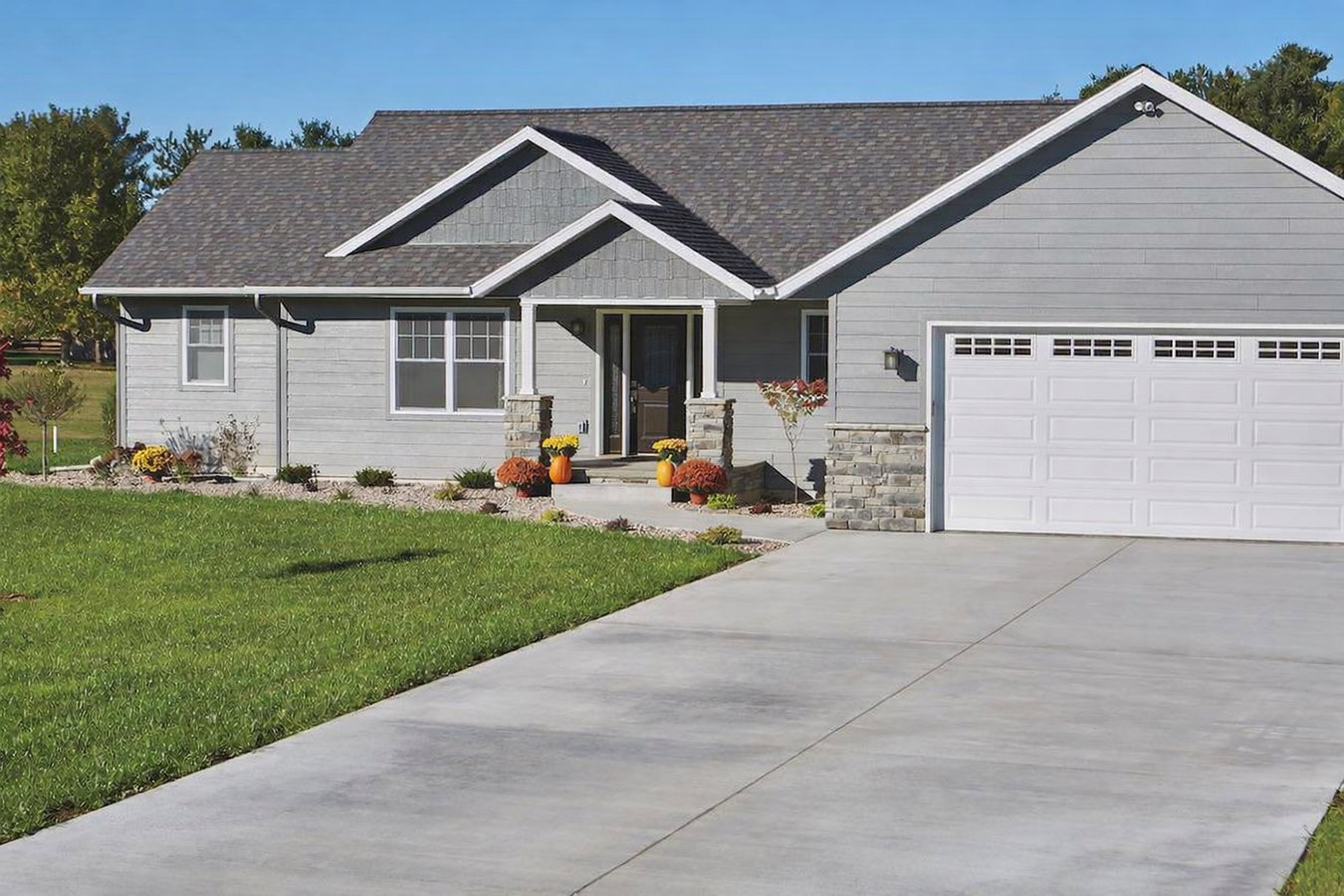
Newark's postwar ranch homes were built with standard-width driveways that are now 40 to 70 years old - most have cracked, shifted, or drained the wrong direction after decades of clay soil movement. Our concrete driveway building service starts with proper base compaction for East Bay soil conditions, so the new slab handles the wet-dry cycle without heaving or cracking ahead of schedule.
Most Newark single-family homes have modest backyards where an outdoor slab makes daily life more usable. Older poured-in-place patios on these properties have settled and cracked, leaving surfaces that drain toward the house rather than away from it. We rebuild them with correct slope and a base prepared for the local clay soils so drainage problems do not return with the first rainy season.
Newark's ranch-style homes are mostly slab-on-grade construction, which means the concrete floor is the foundation. When slabs crack or shift from expansive clay movement, the whole structure is affected. We build slab foundations to current Alameda County code, with the reinforcement and base depth that the local soil conditions require.
Newark's older neighborhoods have front walkways and side paths that have shifted with the soil and become trip hazards. Replacing them correctly - with control joints spaced to allow for East Bay soil movement - prevents the same issues from coming back within a few years. City sidewalk compliance requirements also affect some Newark properties, and we can advise on what is required.
Attached garages are a standard feature on Newark ranch homes, and original garage floors from the 1960s and 1970s are often cracked, stained, and uneven after decades of vehicle loads and soil movement. A new garage floor slab - properly reinforced and finished - gives the space back its function and makes it safer to use daily.
Entry steps on Newark's older homes crack and separate from the foundation as the ground beneath them shifts. Rebuilt steps tied correctly to the structure sit stable through future soil movement and do not create the gap at the top riser that is a common trip hazard on older East Bay homes.
Most of Newark's housing was built between the 1950s and 1980s - a period when California's construction boom produced thousands of ranch-style homes on slab foundations across the East Bay. Those slabs, driveways, and walkways were poured directly onto clay-heavy ground that was not fully understood at the time, and decades of seasonal soil movement have worked on them ever since. The expansive clay soil that runs through Newark and much of Alameda County swells when it absorbs winter rain and contracts through the long dry summer - that constant push-and-pull from below is the primary reason concrete in this part of the East Bay cracks and shifts faster than in other parts of California. A contractor who does not account for this in the base preparation is pouring concrete that is set up to fail early.
Properties on the western side of Newark near the bay and the Dumbarton Bridge face an additional factor: salt air from San Francisco Bay. Salt-laden moisture is corrosive - it degrades sealers faster, attacks exposed metal reinforcement, and works into concrete surface cracks more aggressively than inland conditions allow. Homes close to the bay benefit from a sealed concrete surface and corrosion-resistant reinforcing where it is practical. Newark also sits in the broader East Bay seismic zone, and while it is not directly on the Hayward Fault the way Hayward is, local building code reflects regional seismic requirements that structural concrete projects must meet.
We pull permits for concrete projects through the Newark Building Division and know the local process for flatwork, structural concrete, and retaining walls in this jurisdiction. Permit timelines in Newark are a known quantity for our crew, and we build them into the project schedule so homeowners are not surprised by the wait before work begins.
Newark is a relatively compact city, but the western edge near the bay is noticeably different from the central and eastern neighborhoods. Properties closest to the Don Edwards San Francisco Bay National Wildlife Refuge and the bay shoreline experience more wind and salt air exposure, which changes how we approach sealing and finish choices for those properties. Central Newark - the older ranch neighborhoods near NewPark Mall - has the densest concentration of the city's postwar housing stock and steady demand for driveway replacement, patio work, and garage floor slabs.
We serve the full East Bay corridor around Newark, including neighboring Milpitas to the south and Fremont, which borders Newark and shares the same clay soil and housing stock characteristics.
Contact us by phone or through our online form and we reply within one business day. We will ask about project type, approximate size, and whether existing concrete needs to be removed - enough context to prepare for your site visit.
We visit your Newark property in person - we do not quote over the phone without seeing the site. We assess drainage, soil conditions, and what is underneath any existing concrete, then provide a written estimate that covers every cost. No surprises after you say yes.
We pull all required Newark permits before work starts. On-site, the crew handles demolition of old concrete, base compaction, forming, and the concrete pour. For Newark clay soil conditions, base prep gets extra attention - that is what determines how long the finished slab holds up.
After the pour, the concrete needs 24 to 48 hours before foot traffic and a full week before vehicle use. Once cured and inspected on permitted projects, we walk the finished work with you to confirm every detail matches the agreed scope before we consider the job done.
We serve all Newark neighborhoods - from the older ranch homes in central Newark to properties near the Dumbarton Bridge. Call or message us and we will respond within one business day.
(510) 738-1780Newark is a city of about 48,000 people in Alameda County, situated between Fremont and Union City along the eastern shore of San Francisco Bay. The city grew quickly after World War II and the result is a housing stock that is mostly single-story ranch-style and tract homes built on slab foundations between the 1950s and 1980s. About 60 percent of Newark households own their homes - a higher rate than many Bay Area cities - which means a large share of residents are the ones directly deciding when and how to maintain their properties. The homeownership culture here, combined with home values in the $750,000 to $800,000 range, means most Newark homeowners take maintenance and repair decisions seriously. Newark is conveniently located right off Interstate 880 and near the western end of the Dumbarton Bridge, which gives the city direct access to the Peninsula and contributes to the working-community character that has defined Newark since its postwar growth.
The city's neighborhoods are mostly flat, with standard suburban lot sizes of around 5,000 to 7,000 square feet. Most properties have concrete driveways, front walkways, attached garages, and backyard patios - the full set of concrete features that need attention as homes reach 40 to 70 years old. Newer townhome developments near the Dumbarton corridor have been added in recent years, but the bulk of Newark's residential character is still the original single-family neighborhoods. The western edge of the city borders the Don Edwards San Francisco Bay National Wildlife Refuge, the first urban national wildlife refuge in the United States, and the bay trail running along that edge is well-used by Newark residents. Our service area also covers Union City, just north of Newark along the bay, where the same postwar housing stock and clay soil conditions create the same concrete maintenance needs.
Durable concrete driveways built to handle daily traffic and enhance curb appeal.
Learn moreCustom concrete patios designed for outdoor living and lasting performance.
Learn moreDecorative stamped patterns that add texture and style to any surface.
Learn moreSafe, smooth sidewalks poured to code for residential and commercial properties.
Learn moreProfessional garage floor concrete that resists stains, cracks, and heavy loads.
Learn moreDecorative finishes and overlays that transform plain concrete into a design feature.
Learn moreStructurally sound retaining walls engineered to control erosion and grade changes.
Learn morePrecision floor installations for residential, commercial, and industrial spaces.
Learn moreSlip-resistant pool deck surfaces built for beauty, safety, and durability.
Learn moreSolid concrete steps and stairs crafted for safety and long-term stability.
Learn moreStrong slab foundations poured and finished to support any structure.
Learn moreComplete foundation installation services from excavation through final pour.
Learn moreCommercial-grade parking lots built for heavy use, drainage, and longevity.
Learn moreProperly sized and poured concrete footings to anchor structures securely.
Learn moreExpert foundation raising to level settled slabs and restore structural integrity.
Learn moreServing these cities and communities.
From the older ranch neighborhoods to properties near the Dumbarton Bridge, our crew knows Newark and is ready to give you a written estimate for your project.