Serving Union City, CA and surrounding areas. (510) 738-1780
Building a home, ADU, or addition in Union City? The slab it sits on determines how well it holds up. We pour concrete slab foundations engineered for local clay soil and California seismic requirements, with every project permitted and inspected.
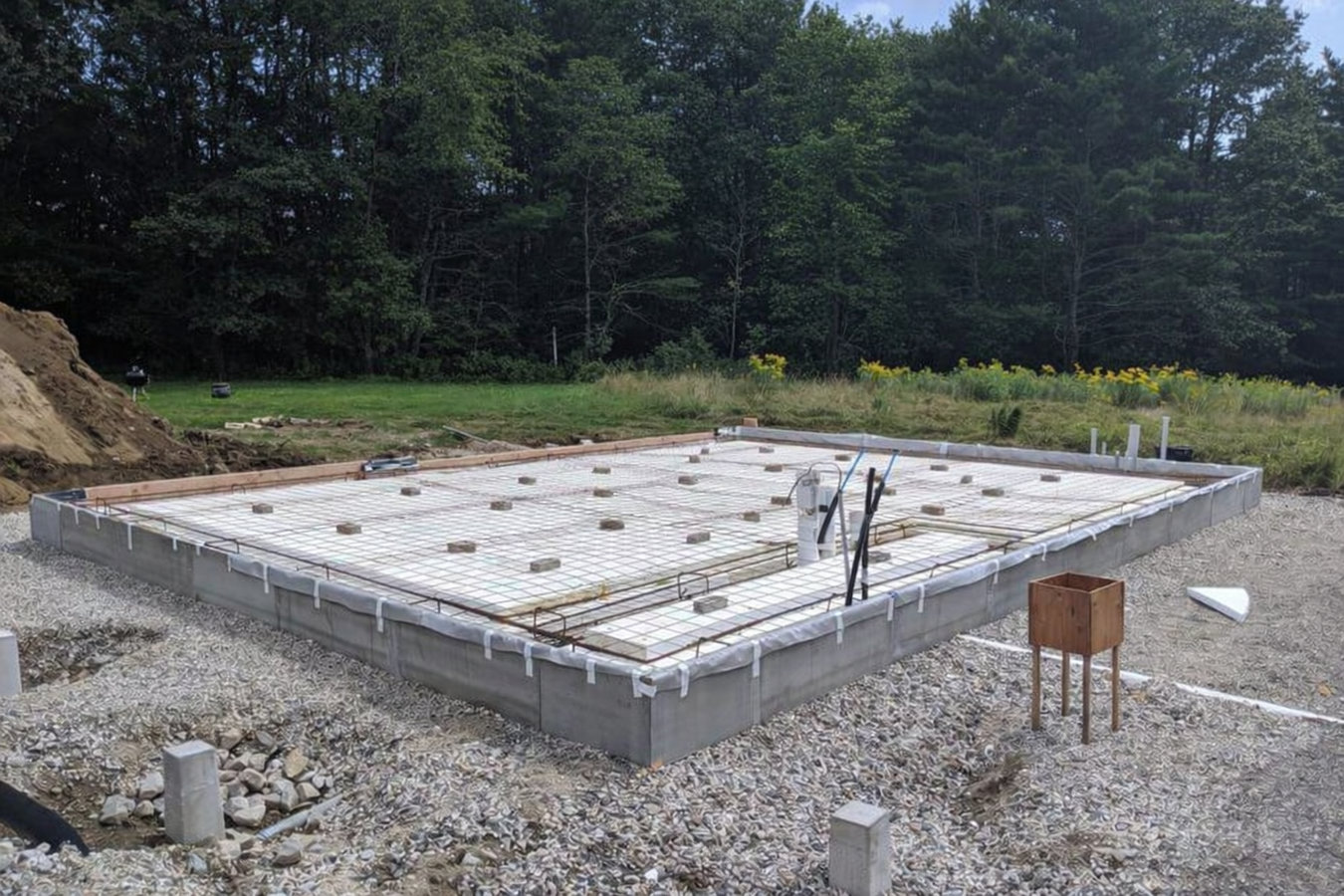
Slab foundation building in Union City means pouring a single reinforced concrete platform that becomes both the floor and the base your structure sits on - most residential projects take one to two weeks from ground prep to a walkable surface, with the pour itself happening in a single day.
The challenge in this part of Alameda County is the ground. Much of Union City sits on Bay mud and expansive clay that swells in the wet season and shrinks in summer, putting constant stress on any concrete poured on top of it. A slab built without accounting for that movement - with thin edges, no moisture barrier, and minimal steel - will crack within a few years. Our approach starts with a site assessment to understand what is actually under your property before we design anything. Many homeowners in Union City who are building an ADU or addition also need concrete footings for adjacent walls or structural posts, which we can coordinate alongside the slab work.
The most straightforward sign is that you are planning to build - a new home, a garage, an ADU, or a large addition. In Union City, ADU construction has grown significantly in recent years, and many homeowners need a new slab for a backyard unit even when the main house is perfectly fine. If your project involves any new structure that will sit on the ground, a slab foundation is part of the plan.
Small hairline cracks in a concrete floor are common and usually not structural. But cracks wide enough to slip a pencil into, or cracks running diagonally from the corners of doorways, are signs the slab may be moving or settling unevenly. In Union City, this kind of movement is often caused by the clay soil swelling and shrinking with the seasons, and it tends to get worse over time if not addressed.
If interior doors have started sticking, or windows that used to open smoothly now bind in their frames, the house may be shifting on its foundation. This is especially worth paying attention to in older Union City homes built in the 1950s and 1960s, where original slabs were sometimes thinner and less reinforced than today's standards require. A concrete contractor can assess whether the slab is the source of the movement.
If water consistently collects against the side of your house after rain, it may be saturating the soil beneath the slab and contributing to movement or moisture intrusion. Union City's wet winters repeat this cycle every year, and over time it can cause serious damage to an older or already-compromised foundation. A site visit from a contractor will identify whether drainage around the foundation is part of the problem.
Every slab project begins with an on-site assessment to evaluate soil conditions, measure the area, and determine whether a soil report from a geotechnical engineer is needed before we finalize the design. This is especially important in Union City neighborhoods close to the shoreline where Bay mud is common. Once the design is set, we excavate to the correct depth, grade and compact the ground, lay a gravel base, and install a plastic moisture barrier before any forming or steel placement begins. The steel rebar grid goes inside the form and creates the reinforcement that allows the slab to flex slightly without breaking under load or ground movement.
We handle the building permit application through the City of Union City and coordinate the pre-pour inspection that the building department requires before any concrete is placed. The pour itself happens in a single day. After the concrete is finished and curing begins, we give you a clear timeline for when foot traffic is safe and when framing can start. For homeowners who need related structural work, we also build foundation installation for full new homes and raised foundations, and concrete footings for walls, fences, and support posts on the same property.
Suits homeowners building a new single-family home, a replacement slab, or a full ground-floor addition requiring a properly permitted concrete base.
Ideal for backyard ADUs, detached garages, and workshops where a smaller slab needs to meet Union City permit requirements and local soil conditions.
For homeowners adding a room or converting a garage to livable space where the existing slab is inadequate or where a new properly rated concrete base is required by the building department.
Union City presents two conditions that make foundation work here more demanding than in many other parts of California. The first is the soil. Expansive clay and Bay mud are widespread in the city, particularly in the lower-lying areas that were developed most heavily in the 1960s through 1970s. That seasonal soil movement is the primary cause of cracked and shifting slabs in older Union City neighborhoods, and it means the ground preparation phase of any new slab project cannot be rushed or skipped. The second is seismic exposure - the Hayward Fault runs close to Union City, and California building requirements for this region call for more steel reinforcement and stricter design standards than you would need in a low-seismic area. The California Geological Survey publishes seismic hazard zone maps that help contractors understand the specific requirements for each neighborhood.
We work across Union City and the surrounding East Bay, including slab projects in Milpitas and Dublin. The permit and inspection process is consistent across this region, and our crews are familiar with how the building departments in each city handle the pre-pour inspection that is required before any concrete is placed. The California Department of Housing and Community Development sets the statewide building standards that all slab foundation work must meet, with local amendments specific to each jurisdiction.
We ask a few basic questions on the first call - the size of the area, what you are building, and whether you have an existing permit. Because soil conditions and site access vary across Union City, we schedule a free on-site visit before giving you a firm price. Expect to hear back within one business day to set that up.
During the site visit we look at ground conditions, check access for equipment, and review the design with you. For many Union City projects - especially near the shoreline or in older neighborhoods - we may recommend a soil report from a geotechnical engineer before finalizing the design. That report typically takes one to two weeks and protects you from a foundation that is not built for your specific ground.
We submit the permit application to the City of Union City Building Division on your behalf. For a standard residential slab, this typically takes two to four weeks. Once approved, we schedule the start date and prepare the site - excavating, grading, compacting, and installing the gravel base and moisture barrier before any forming or steel placement begins.
A city inspector visits before the pour to verify the steel and moisture barrier are correctly in place - this is required, not optional. Once the inspection passes, the concrete trucks arrive and the pour is done in a single day. The slab needs to cure for at least a week before framing begins and reaches full strength at 28 days. We give you a specific curing timeline before we leave the site.
Free on-site estimate. We handle the permits. No obligation.
(510) 738-1780Union City requires a permit and a pre-pour inspection on every new slab foundation - no exceptions. We handle the permit application on your behalf, schedule the city inspection, and make sure the work passes before a single yard of concrete is poured. That protects you legally and matters when you go to sell.
Every slab we build near the Hayward Fault includes the steel reinforcement and footing depths that California requires for seismic zones. We do not treat the seismic requirements as a checkbox - we treat them as the standard. The California Contractors State License Board verifies contractor licensing for all foundation work in the state.
We build slab foundations across Union City and 11 surrounding communities in Alameda and Santa Clara counties. That regional experience means we understand how permit processes, soil reports, and inspection requirements work in each city - which shortens the timeline and reduces surprises on your job.
Union City has actively supported ADU construction in recent years, and we have poured slabs for backyard units, converted garages, and room additions across the city. ADU slab projects have specific permit pathways that are often faster than a full home permit - and we know how to navigate them to keep your project on schedule.
Every project we take in Union City is permitted, inspected, and built for the specific conditions of this part of the East Bay. That is not something we advertise as a differentiator - it is simply how foundation work has to be done here.
Full foundation installation for new homes, additions, and ADUs - designed for Union City soil conditions and California seismic requirements.
Learn morePrecision concrete footings for walls, posts, and structural supports, sized and reinforced for the ground conditions specific to your Union City site.
Learn moreOur calendar fills quickly during the dry season - reach out now for a free on-site estimate before the spring and summer slots are gone.